 Back to Blogs
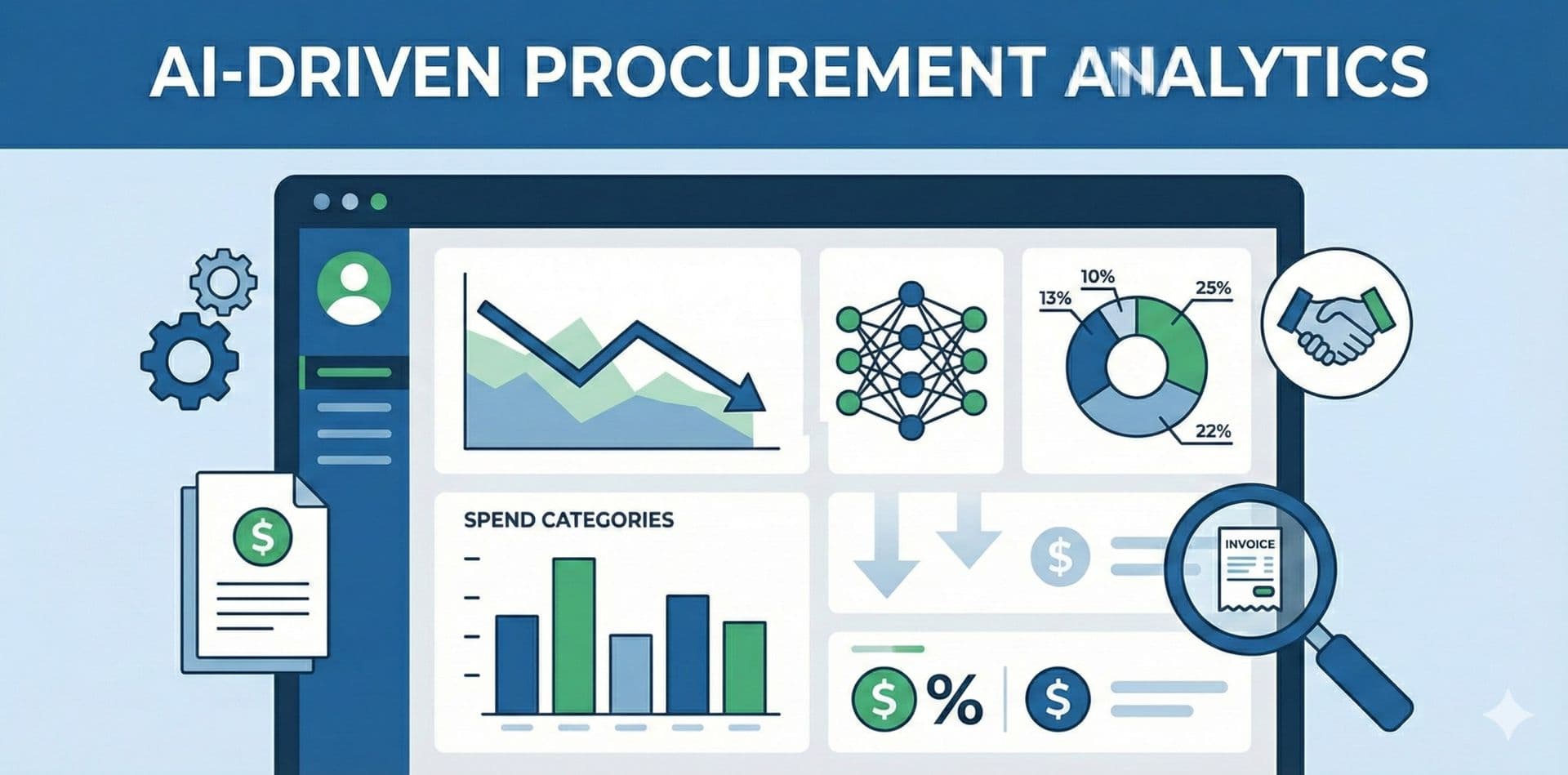
7 Ways Procurement Teams Save Money with AI Driven Spend Analysis
Procurement used to be simple: get three quotes, pick the cheapest one, and file the paperwork.
Procurement today is a different beast. It’s a mess of disconnected spreadsheets, manual invoice matching, and those dreaded "let me check with Finance" emails that sit in your outbox for three days. You aren't managing strategy; you're playing detective with your own data.
The promise of AI is that it moves you from detective work to strategic action. We’re talking about automated classification, smarter negotiations, and catching fraud before the money leaves the building.
But here is the hard truth that most "AI buzzword" articles won't tell you: AI is useless without clean data.
If your invoices, POs, contracts, and ERP records aren't flowing into a single, model-ready structure, your AI has nothing to analyze. This is usually where teams get stuck and it’s exactly where ETL0 fits in. We automate the extraction and transformation of that messy data so the AI can actually do its job.
Once you have that data pipeline flowing, the ROI is real. Here are seven concrete ways we see procurement teams turning raw data into dollars saved, plus the exact KPIs you need to track.
1. Find Hidden Savings with Automated Classification
Let’s be honest: manual categorization is where good data goes to die. It is slow, inconsistent, and prone to human error.
When you feed clean, integrated data into an AI model, it can automatically classify spend by SKU, service type, or cost center. Suddenly, you aren't just looking at a list of vendors; you're seeing what you're actually buying. This reveals the "Maverick Spend" the unused subscriptions and the duplicate suppliers charging you different rates for the same service.
- The Fix: Run a 60-day classification pilot on your top 20% spend categories. Use the data to spot consolidation opportunities.
- KPI to Track: % of spend correctly classified; Number of duplicate suppliers found.
2. Speed Up Supplier Discovery (and Leverage)
Old school sourcing meant weeks of Googling and calling references.
AI changes the game by scanning supplier performance history and external market signals instantly. It surfaces alternative suppliers you didn't know existed, shortening your RFP cycles and giving you massive leverage. When you know there are three other vendors who can do it cheaper and faster, your negotiation posture changes immediately.
- The Fix: Run "supplier discovery" queries for 3 hard-to-source categories. Compare the AI-sourced quotes against your incumbents.
- KPI to Track: Reduction in sourcing cycle time # of competitive bids per RFx.
3. Stop the Leakage: Duplicate Payments & Fraud
This is the low-hanging fruit. AI anomaly detection is significantly faster and more accurate than a human reviewer at flagging invoice mismatches, duplicate payments, and outlier pricing.
If you are using ETL0 to pipe your AP and PO data into these models in real-time, you can catch these errors before payment runs, not six months later during an audit.
- The Fix: Connect 6 months of historical AP/PO data and run anomaly detection. Review the top 10 flags with Finance.
- KPI to Track: Duplicate payments prevented ($) FTE hours saved on manual review.
4. Build Data-Driven Negotiation Playbooks
You should never walk into a negotiation relying on "gut feeling."
When your spend data is normalized and enriched (thanks to a solid data pipeline), AI can generate a negotiation playbook for you. It tells you the target price, the leverage points, bundling opportunities, and likely concessions based on historical data. You stop guessing and start executing.
- The Fix: Create AI-driven negotiation briefs for your top 10 suppliers. Know their compliance gaps and your alternative options before you pick up the phone.
- KPI to Track: % discount achieved vs. baseline.
5. Forecast Spend (Don't Just React to It)
Most procurement is reactive. “We’re out of stock, buy more now!” which usually means paying premium rush fees.
AI models can forecast commodity prices and demand spikes, allowing you to hedge or pre-buy. This moves you from "fighting fires" to "strategic hedging."
- The Fix: Pilot forecast models on two volatile categories (like raw materials or freight) and set threshold alerts for when to buy.
- KPI to Track: Reduction in premium/emergency purchases.
6. Continuous Compliance & "Rogue Spend" Control
The best-negotiated contract is useless if no one uses it.
AI can continuously monitor purchases against your preferred-supplier lists and regulatory rules. It flags off-contract spend the moment it happens. This isn't just about policing; it’s about channeling spend back into the agreements where you’ve already negotiated the best terms.
- The Fix: Enable policy rules for one specific department (e.g., Marketing) and measure off contract spend before and after.
- KPI to Track: Recovery amount via retroactive negotiations.
7. Free Up Your People
This is the most underrated saver. If your smartest people are spending 20 hours a week matching invoices, you are losing money.
By automating the grunt work classification, matching, basic queries you free up your team to do what humans do best: strategy, relationships, and innovation.
- The Fix: Quantify the hours spent on manual tasks. Automate the top two.
- KPI to Track: Hours automated; % of time shifted to strategic sourcing.
A Real-World Example
We recently saw a mid-sized manufacturer integrate their invoice, PO, and contract data into an AI-driven spend analysis stack (powered by a unified data layer).
The results in the first 90 days:
- Identified 40+ duplicate or inactive suppliers.
- Consolidated three major categories.
- Reduced sourcing cycle time by ~18%.
- Recovered six figures in erroneous payments.
They didn't rewrite their entire tech stack to do this. They just started by connecting their existing ERP and AP tools into a central workflow layer.
The Bottom Line
AI in procurement isn't science fiction, and it isn't "coming soon." It's here, and it's saving teams double-digit percentages on their spend.
But remember: Smart AI needs smart data pipelines. If you're ready to stop wrestling with spreadsheets and start automating your data flow, that’s where we can help.
[Start building your data pipeline with ETL0 today ->]
Latest Articles

From Learning to Innovation: Leren Labs at IBC2026
Technology changes the possibilities of media, but possibilities aren't the same as progress. The more interesting question is what happens when emerg...
-300x195.png&w=3840&q=75)
The Intelligence Stack at Leren Labs: How We Make Learning Actually Work
There’s a lot of talk about AI, tools, and the future of work. Every week, it feels like a new platform, a new model, or a new promise appears. But wh...

Data Then vs Now: The Shift from Data Warehouses to Streaming Data
Data analytics has changed shape three times. From Stored Truth to Moving Signals
Want to read more insights?
Subscribe to our newsletter and get the latest articles, updates, and industry insights delivered straight to your inbox.